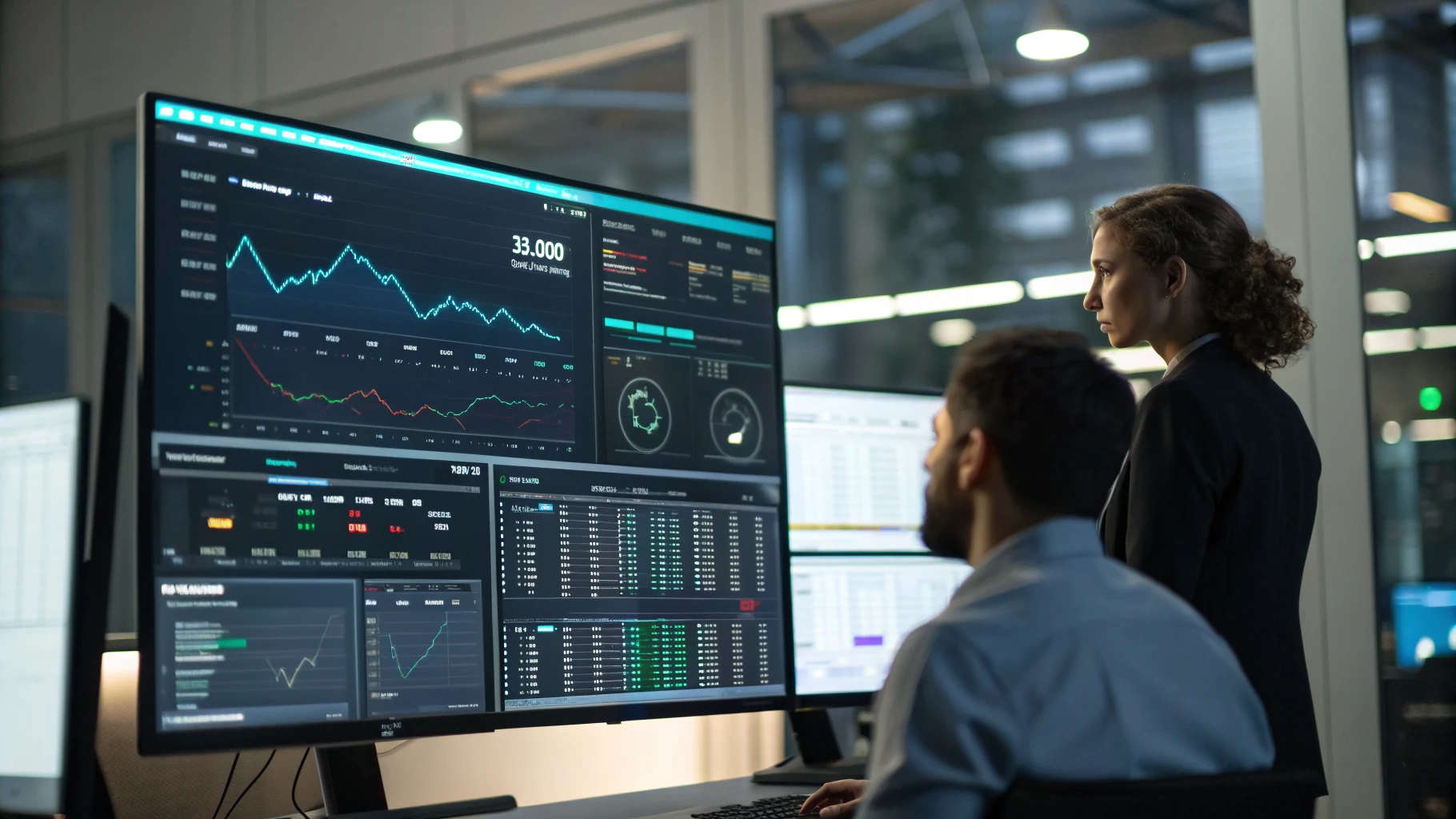
The algotradingbot live signal desk delivers real-time, AI-generated buy and sell indicators directly to MetaTrader 4 and MetaTrader 5 platforms. Built for traders seeking disciplined market execution, it processes institutional-grade Smart Money Concepts, order block detection, and deep learning computations to output actionable directional bias across forex, gold, and cryptocurrency assets. By removing the guesswork from asset tracking, this infrastructure helps bridge the gap between complex market data and timely trade placement.
Key Takeaways
- Delivers real-time AI trading signals for Forex, Gold (XAUUSD), and Crypto directly to MT4 and MT5 terminals.
- Features institutional-grade Smart Money Concepts (SMC) analysis and order block detection algorithms.
- Provides automated execution capabilities where signals trigger trades instantly via EA connectivity.
- Integrates with core platform tools including the Strategy to Expert Advisor builder and custom expert advisor development services.
Understanding the algotradingbot live signal desk
Modern financial markets require swift responses to rapid volatility shifts. Manual analysis often leaves retail traders reacting after momentum has peaked. The algotradingbot live signal desk solves this latency challenge by bridging advanced market intelligence with automated execution frameworks. Operating actively 24/5, the system evaluates incoming price action, identifies structural liquidity pools, and generates structured entry, stop-loss, and take-profit parameters.
Unlike basic alert channels, this infrastructure connects directly to trading terminals. Users choose whether signals generate manual notification alerts or trigger trades automatically through expert advisor integration. This dual approach accommodates both discretionary risk managers and fully automated strategy operators navigating dynamic financial environments.
When scaling operational volume, relying solely on manual chart inspection introduces human fatigue and emotional bias. Algorithmic intelligence provides a systematic counterweight. By continuously evaluating market breadth across dozens of instruments, the live signal desk highlights high-probability setups that might otherwise escape notice during heavy session hours. Traders can also pair these feeds with platform tools like the Strategy to Expert Advisor builder to turn qualitative market observations into fully testable trading logic without writing raw code from scratch.
Core Architecture and Signal Generation Mechanics
Operational efficiency relies on clean data pipelines and rigorous processing rules. The signal desk operates through specific structural layers designed for low-latency transmission and reliable order routing across retail brokerage infrastructure:
- Market Scanning: Continuous monitoring across 50+ currency pairs, crypto assets, and commodities to track emerging trend shifts.
- Smart Money Filtering: Institutional order block mapping to isolate high-probability institutional footprints and structural liquidity zones.
- Parameter Assignment: Automatic calculation of exact entry levels, confidence ratings, momentum metrics, and pre-defined risk boundaries.
- Terminal Routing: Direct transmission to MetaTrader instances via optimized API integration and server-side communication bridges.
By pairing live market intelligence with structured code generation, traders move seamlessly from reading market bias to constructing automated logic. When coding custom rules, users can also utilize integrated AI code revision assistance to troubleshoot MetaEditor compilation errors directly, ensuring that custom-built scripts compile cleanly without syntax bottlenecks.
Execution Workflows: Automated Routing vs. Manual Oversight
Deploying live signals effectively demands strict adherence to risk management parameters. Traders face a fundamental choice between fully automated execution and manual gatekeeping before orders reach brokerage servers.
With automated routing, the connected EA interprets incoming signal payloads and places orders within milliseconds. This removes emotional hesitation during high-impact news releases or fast-moving liquidity sweeps. Conversely, manual override workflows allow traders to evaluate the signal's confidence rating—such as setups displaying high algorithmic confidence—before approving order placement.
Execution speed and order routing efficiency dictate slippage control. Institutional-grade infrastructure minimizes latency between signal generation and broker server execution, protecting profit margins on scalping and intraday strategies. Maintaining this technical precision ensures that backtested theoretical edges translate accurately into live brokerage accounts.
Risk Management and Security Considerations
Deploying automated workflows requires robust risk controls to protect trading capital against unexpected market anomalies. Financial data feeds and API integrations must maintain stringent security protocols to prevent interception or packet loss during transmission. Furthermore, implementing strict position sizing rules, daily drawdown caps, and predetermined stop-loss boundaries helps safeguard accounts against sudden volatility spikes. Combining the live signal desk with verified historical backtests ensures that risk parameters are thoroughly vetted before deploying real capital into live markets.
Frequently Asked Questions
What is a live signal desk in algorithmic trading?
A live signal desk is a centralized processing system that generates real-time trading recommendations based on quantitative analysis, machine learning models, or Smart Money Concepts, and transmits them directly to trading terminals for execution or user review.
How do trading bots process real-time signals?
Trading bots process real-time signals via API or terminal-level communication. When a signal is published, the expert advisor parses the incoming parameters—including asset class, entry price, stop-loss, and take-profit—and executes the order according to pre-configured lot sizing and risk rules.
What risks are associated with automated live signal execution?
Automated execution carries risks such as network latency, unexpected slippage during volatile news events, and inadequate risk parameter settings. Utilizing verified performance tracking and strict stop-loss protocols helps mitigate these operational hazards.
How do I choose the right API for a trading bot signal desk?
Selecting an API requires evaluating data throughput speed, uptime reliability, security encryption standards for financial data feeds, and native compatibility with MetaTrader 4 or MetaTrader 5 environments.
Tactical Implementation Roadmap
To integrate the signal desk into your daily workflow without compromising account stability, follow these operational steps:
- Connect Your Terminal: Establish secure bridge connectivity between your brokerage account and the MetaTrader platform using official terminal connection guides.
- Calibrate Risk Parameters: Define maximum allowable drawdown, lot sizing rules, and risk-to-reward thresholds before enabling live execution.
- Select Asset Focus: Choose specific markets—such as Forex majors or Gold (XAUUSD)—to align with your trading schedule and capital requirements.
- Monitor and Refine: Track signal performance metrics regularly, utilizing backtesting data and verified track records to optimize your automated rules over time.
Ready to turn these ideas into results?
Move from insight to action with a solution aligned to your goals.