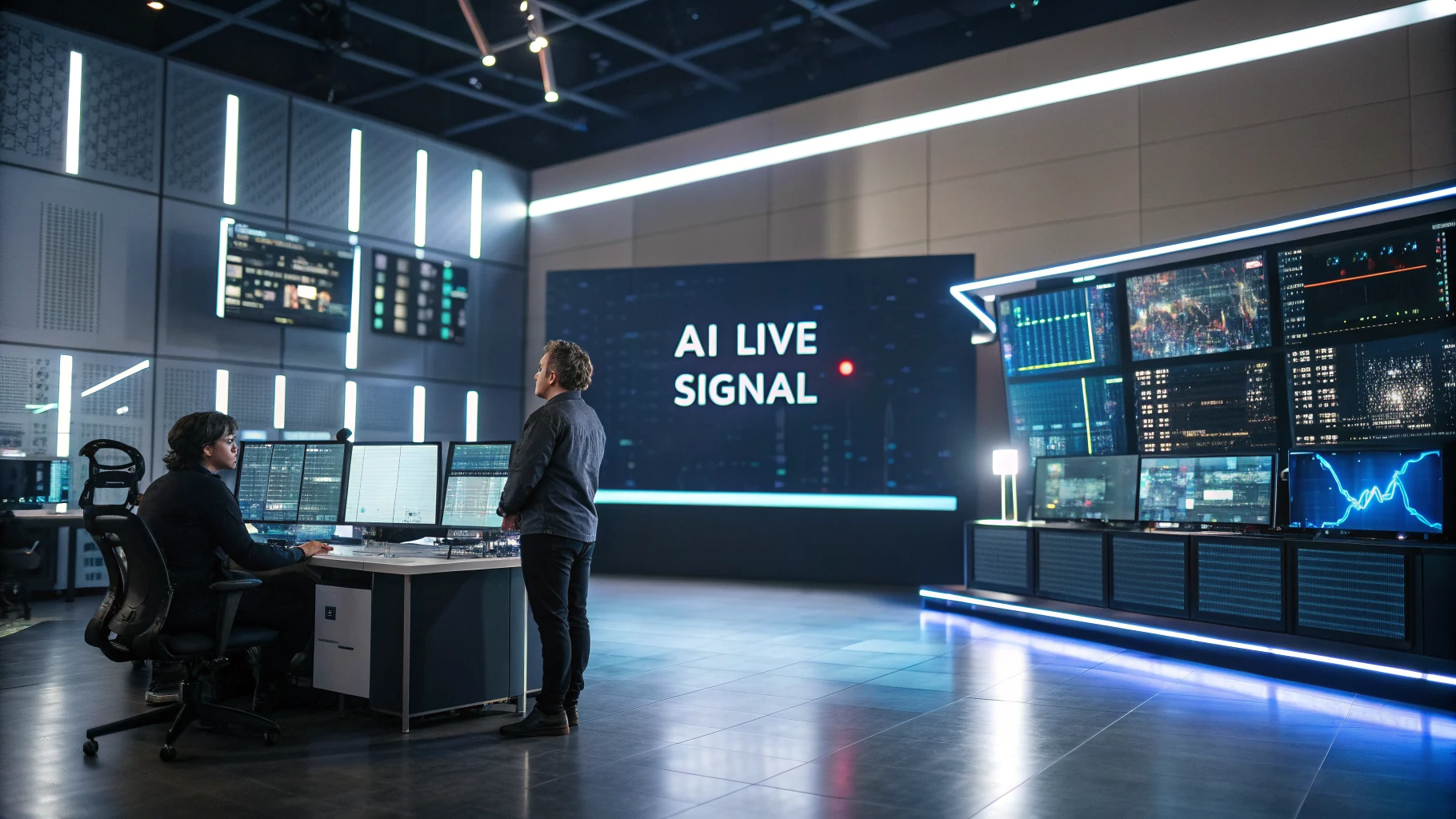
An AI Live Signal delivers real-time, algorithmic buy and sell directives directly to your MetaTrader terminal, targeting volatile asset classes like Forex, Gold (XAUUSD), and cryptocurrencies. AlgoTradingBot bridges the gap between manual retail trading and automated execution by supplying institutional-grade Smart Money Concepts (SMC) analysis, order block detection, and deep learning signals. Designed for traders seeking systematic discipline, the platform provides clear directional bias, entry prices, stop-loss markers, and take-profit targets.
- AI Live Signals offer real-time buy/sell alerts for Forex, Gold, and Crypto markets.
- Signals integrate directly into MT4 and MT5 platforms for automatic execution or manual confirmation.
- Advanced models leverage institutional Smart Money Concepts (SMC) and order block detection.
- Users can pair live signals with the Strategy to Expert Advisor builder to code custom logic.
The Mechanics of AI Signal Generation
Modern signal generation relies on processing vast streams of real-time data through a machine learning model. Rather than depending on lagging human observation, quantitative algorithms scan tick data across multiple timeframes to spot structural market shifts. These systems scan for order blocks, liquidity sweeps, and fair value gaps using neural networks trained on decades of historical price action.
When market conditions align with pre-trained parameters, the system calculates a statistical confidence rating. For instance, an active XAUUSD setup might output a specific buy entry, tight stop-loss, and calculated take-profit with an 89% confidence metric. This quantitative rigor removes emotional bias from the entry decision, giving retail participants access to institutional-grade analytical depth.
Behind every robust signal pipeline lies an intricate architecture of data ingestion, processing, and output delivery. Raw tick data streams from global liquidity providers enter low-latency server clusters where preprocessing modules filter out noise and asynchronous pricing spikes. Once cleaned, the time-series data feeds into predictive analytics models running specialized pattern recognition routines. These models evaluate momentum metrics and volume profiles against historical distributions to ascertain trend continuation or reversal probabilities. Institutional research underscores the importance of maintaining low latency during high-frequency data ingestion, as millisecond delays degrade order block recognition accuracy.
Furthermore, continuous neural network retraining ensures that algorithmic weights adapt to shifting macroeconomic regimes. When central bank policies or liquidity distributions alter market behavior, adaptive models re-weight historical features to preserve predictive fidelity across changing volatility cycles.
Bridging Signals and Automated Execution
Receiving a signal is only half the battle; execution speed and risk parameters dictate long-term survival. Retail traders frequently struggle with slippage, delayed order entry, and emotional hesitation when a trade setup appears. By connecting live intelligence directly to MetaTrader 4 or MetaTrader 5, automated execution protocols eliminate human lag.
Traders configure their terminals to let the Expert Advisor place trades automatically or trigger alerts for manual confirmation. This workflow integrates cleanly with AlgoTradingBot's broader ecosystem. Beyond subscribing to live feeds, users can transition from passive signal consumers to active creators by utilizing the Strategy to Expert Advisor builder, turning plain English rules into editable MQL5 source code.
Achieving zero-lag API integration requires robust network protocols and secure authentication mechanisms between the cloud signal infrastructure and the local terminal instance. When a high-probability setup clears the algorithmic threshold, a secure payload containing symbol parameters, volume allocations, and bracket orders is transmitted via webhooks to the MetaTrader bridge. The bridge translates this payload into native order requests, bypassing manual input bottlenecks. For traders preferring a hybrid approach, the system can route instructions through alert-only configurations, requiring a single manual approval click before order submission.
Automated execution infrastructure must also account for broker-side requotes and execution limits. By decoupling the analytical computation from local hardware and executing orders via optimized server bridges, algorithmic pipelines minimize execution slippage during high-impact news windows.
Managing Risk in Volatile Markets
Market volatility can quickly invalidate even the most advanced predictive analytics if proper risk parameters are absent. Institutional algorithms prioritize capital preservation through strict position sizing, predetermined stop-losses, and dynamic volatility adjustments. When deploying automated signals or custom Expert Advisors, traders must monitor latency, check broker execution speeds, and account for historical slippage.
AlgoTradingBot supports this analytical workflow by offering integrated backtest risk previewing. Before allocating capital to live markets, developers and signal followers can test rule logic and review historical performance metrics inside a single workstation environment.
Stress-testing signal providers against historical slippage and latency spikes is a mandatory prerequisite for long-term consistency. Real-world execution variance often stems from broker-specific liquidity depth during macroeconomic news releases. Traders must evaluate how historical spreads interact with automated stop-loss placement, ensuring that algorithms do not trigger premature liquidations during routine liquidity contractions. Proper risk management frameworks also dictate capping maximum portfolio exposure per asset class, preventing correlated pairs from compounding unexpected drawdown.
Security and API key management represent critical vectors when linking third-party automated signal execution modules to brokerage accounts. Encrypted communication channels, tokenized session management, and restricted-permission API keys ensure that automated pipelines maintain isolated execution authority without exposing master account credentials to external threats. Independent cybersecurity frameworks, such as those outlined by NIST, emphasize the necessity of least-privilege API access for automated financial tooling.
Tactical Implementation Roadmap
To integrate AI-driven intelligence into your daily routine without exposing capital to unnecessary risk, follow this deployment sequence:
- Select Your Asset Focus: Choose primary markets such as major Forex pairs, XAUUSD, or selected cryptocurrencies based on your liquidity preferences.
- Establish Terminal Connectivity: Link your MetaTrader 4 or MetaTrader 5 account to receive real-time updates directly on your charts.
- Review Confidence Metrics: Examine incoming signals for directional bias, entry points, stop-loss levels, and statistical confidence ratings before execution.
- Choose Execution Mode: Set your parameters to fully automated execution or alert-only mode depending on your desired level of oversight.
- Refine and Build: Transition successful manual rule sets into automated systems using the platform's code builder and AI revision assistant.
Ready to turn these ideas into results?
Move from insight to action with a solution aligned to your goals.